Unblocking a stalled build in a month.
A high-profile UK consumer website, delivered by an in-house digital team
- 01 Diagnosed firstPeople
Delivery leadership sat with no delivery background
- 02 Diagnosed secondCulture
Content, design and build worked as three groups
- 03 Diagnosed thirdProcess
Blocked, with no route to a delivery date
The site was not late because the work was slow. It was late because a set of decisions had nobody to make them.
A national consumer website with a rebuild that had stopped moving. Not slipping. Stopped. There was no delivery date, and no route to one.
The work was being done in-house, by an established digital team inside a large corporate business.
Nobody owned the decision
PeopleI started with the team, not with leadership. Direct questions, asked of the people doing the work, about what was actually stopping them. Ask leadership first and you tend to get the account the organization has agreed to tell itself. Ask the team first and you get the blockage.
Delivery leadership had been placed with someone the business had not equipped for the role. That is a common finding and it is rarely anyone's fault at the individual level. It is what happens when an organization grows a digital function faster than it grows the capability to run one.
The consequence is specific and it is structural. When the person accountable for delivery has not delivered before, the calls that only they can make do not get made. The work does not stop because anyone refuses. It stops because nobody says yes.
Three groups, not one team
CultureContent, design and development barely spoke to each other. They were three functions occupying the same programme, not a team delivering one product.
The team was demotivated, which is what happens to capable people who keep arriving at a decision point and finding nobody there.
That is a cultural finding, not a process one. No amount of governance fixes a programme where the three groups who must agree have no habit of talking.
The build was not slow, it was waiting
ProcessThe root of the block was a set of design and content decisions that nobody would make. Every one of them sat between two of the three groups, and none of the three had the standing to settle it alone.
Once those decisions were unmade, everything downstream of them was unbuildable. That is why there was no delivery date. A date requires a route, and the route ran through decisions that had no owner.
The first changes were for the team, and they were physical.
- I sat the digital team together. Content, design and development in one space. The three groups stopped being three groups the moment they could hear each other.
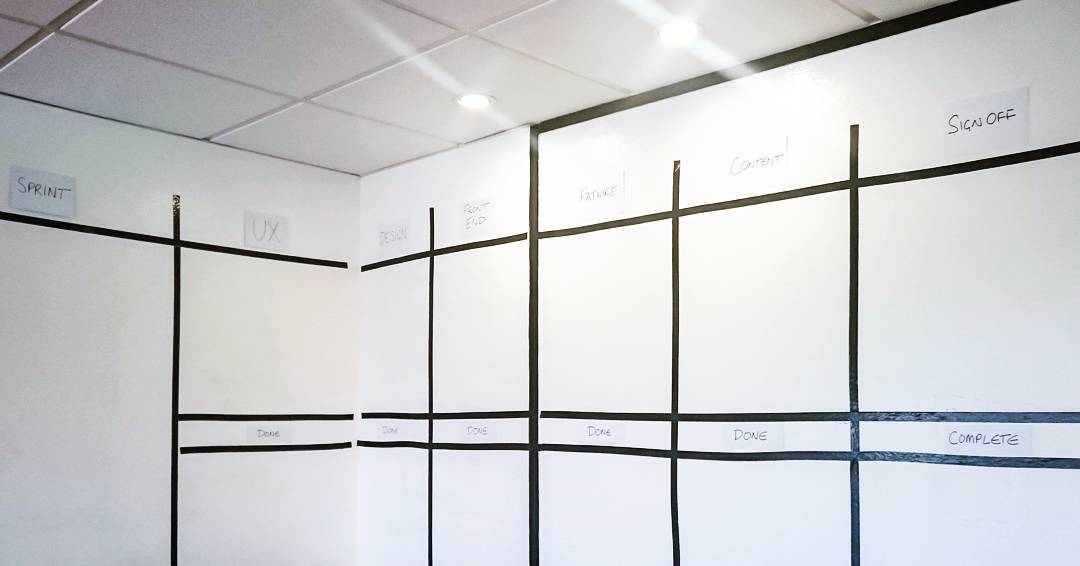
- I put a Kanban wall up in the corporate office. Not a tool, a wall. The work became visible to the team, and to everyone in the business who walked past it.
- I set out the evidence. Which decisions were blocking the build, what each one was holding up, and who needed to make it. A decision with a name against it, and a visible cost to leaving it open, stops being deferred.
None of that benefited management first. It cost the business the ability to leave a decision unmade indefinitely.
With the decisions settled, a route to delivery existed for the first time, and a roadmap could be written against it. That roadmap had not been possible before, because a roadmap built on unmade decisions is a work of fiction.
One month from arriving, the programme was unblocked and had a delivery plan. The site went live.
This is the case where the three layers form a chain rather than three separate findings.
Delivery leadership without a delivery background means nobody owns the calls. Three functions working separately means none of them can force a decision between themselves. So the decisions sat unmade, and unmade decisions were what blocked the build.
Process was the symptom. It was the last thing diagnosed and the last thing fixed, and fixing it directly would have achieved nothing, because the block was never in the process.